Showing posts with label books. Show all posts
Showing posts with label books. Show all posts
15 June 2007
Me Talk Pretty One Day
I certainly hope you've noticed a pattern by now. This is the third installment of 'art stuff in books not really about art', and today it'll be from David Sedaris, around page 51. This quote is drawn from the chapter Twelve Moments in the Life of the Artist, and this moment is number Nine in which David has become a performance-conceptual-happenings artist.
------
Watching the performances of my former colleagues, I got the idea that once you assembled the requisite props, the piece would more or less come together on its own. The inflatable shark naturally led to the puddle of heavy cream, which if lapped from the floor with slow steady precision, could account for up to twenty minutes of valuable stage time. All you had to do was maintain a shell-shocked expression and handle a variety of contradictory objects. It was the artist's duty to find the appropriate objects, and the audience's job to decipher meaning. If the piece failed to work, it was their fault, not yours.
------
It's Mary Ann again with a bit of summary: he goes to a thrift store for 'appropriate objects' and chooses a pile of sock monkeys. He tells the check out lady that he's an artist and she says her daughter is an artist too.
------
I looked into this woman's face, her fuzzy jowls hanging like saddlebags, and I pictured her reclining nude in a shallow pool of peanut oil. Were she smart enough to let me, I could use her as my living prop. I could be the best thing that ever happened to her, but sadly, she was probably too ignorant to appreciate it. Maybe one day I'd do a full length piece on the topic of stupidity, but in the meantime, I'd just pay for the sock monkeys, snort a few lines of speed, and finish constructing a bulletproof vest out of used flashlight batteries.
------
The whole chapter is like that--full of descriptions of his crazy projects and his self-important description of them. Oh yes, he took his art very seriously. I've been wondering if he made it all up or if he really did this stuff. If I ever get to meet him, I think I'll ask.

13 June 2007
Humboldt's Gift
The title of today's post is one-and-the-same with Saul Bellow's book, from which I, not coincidentally, will now quote extensively.
Humboldt and Charlie, our two main characters, are talking. Or rather, Humboldt is talking (as always) and Charlie is (predictably) listening. Humboldt has been going for a while already and Charlie knows this rant well enough to see certain sections coming.
------
And at this point Humboldt generally spoke of Antonin Artaud. Artaud, the playwright, invited the most brilliant intellectuals in Paris to a lecture. When they were assembled there was no lecture. Artaud came on stage and screamed at them like a wild beast. "Opened his mouth and screamed," said Humboldt. "Raging screams. While those Parisian intellectuals sat frightened. For them it was a delicious event. And why? Artaud as the artist was a failed priest. Failed priests specialize in blasphemy. Blasphemy is aimed at the community of believers. In this case, what kind of belief? Belief only in intellect, which a Ferenczi has now charged with madness. But what does it mean in a larger sense? It means that the only art intellectuals can be interested in is an art which celebrates the primacy of ideas. Artists must interest intellectuals, this new class. This is why the state of culture and the history of culture become the subject matter of art. This is why a refined audience of Frenchmen listens respectfully to Artaud screaming. For them the whole purpose of art is to suggest and inspire ideas and discourse. The educated people of modern countries are a thinking rabble at the stage of what Marx called primitive accumulation. Their business is to reduce masterpieces to discourse. Artaud's scream is an intellectual thing. First, an attack on the nineteenth-century 'religion of art,' which the religion of discourse wants to replace . . .
pgs. 31-2
------
Just thought it was interesting and passing it along. I've been thinking of all kinds of equivalent 'stunts' that artists have pulled. Empty galleries, performance art of any description, Warhol’s movies. And yeah, I half expect that they did it to see if people would stay in their seats.
12 June 2007
On Beauty
The title of the post is one-and-the-same with the title of a book I'm about to extensively quote. By Zadie Smith. If you'll be mad to find a potential spoiler here, I urge you to quit now. NOW.
The scene is New England, a family home. The mother (Kiki) is clearing out the junk in her teen-age son's (Levi) bedroom. Her other son (Jerome, nearly 20) has lifted one end of his brother's bed off the ground so that she can clear out the crap.
------
Jerome hiked up his end of the bed.
'Higher' requested Kiki and Jerome obliged. Suddenly Kiki's right knee slipped and her hand went to the floor. 'Oh my God' she whispered.
'What?'
'Oh my God'
'What? Is it porn? My arm's getting tired' Jerome lowered the bed a little.
'DON'T MOVE' screamed Kiki.
Jerome, terrified, lifted the bed higher. His mother was gasping like she was having some kind of fit.
'Mom--what? You're scaring me man. What is it?'
'I don't understand this. I DON'T UNDERSTAND THIS'
'Mom I can't hold this any longer'
'HOLD IT'
Jerome saw his mother grip the sides of something. She slowly began to pull out whatever it was from under the bed.
'What the . . . ?' said Jerome.
Kiki dragged the painting to the middle of the floor and sat next to it, hyperventilating. Jerome came up behind her and tried to touch her to calm her, but she slapped his hand away.
'Mom I don't understand what's going on. What is that?'
Then came the sound of the front door clicking and opening. Kiki lept to her feet and left the room, leaving Jerome to stare at the naked brown woman surrounded by her technicolor flowers and fruit.
------
Clever, isn't it? Oh, we all know that tired old debate about where art ends and porn begins, and which kinds of nudity qalify in which categories. TIRED. And we have long since grown accustomed to seeing porn where we thought we'd find art. But I have to hand it to Zadie Smith. She's found a way to laugh at it all by dumping it upside down. She's put a nude paiting--art as much as art can be under the bed of a teenage boy, where a stash of porn would be entirely expected if not somehow required. I just love Jerome's question 'Is it porn?' (and holding up the bed, he can't see a thing). Brilliant.
I love books that do this kind of thing. You wouldn't even know she was making fun of the distinction unless you knew to look for it.
26 April 2007
See and be Seen
I'm about half way through the first book in the Cairo Trilogy by Naguib Mahfouz. Why am I reading the trilogy? First, because Mahfouz is the only Arabic-language writer to ever receive the Nobel Prize for literature. Second, it came highly recommended. Third, it is well written. Not even being translated into English could ruin the quality of the writing.
(those reasons are in chronological order, not priority order. Nobel Prizes have not redeemed other authors I’ve picked up in the past)
So, like I said, I'm about half way into the first book, Palace Walk, and I just (literally 5 minutes ago) read the passage where Amina, the mother in the story's central family, has been persuaded by her children to venture out into the street for the first time EVER. This is a very traditional family, with a very authoritarian, unkind, and distant father. He leaves for a short business trip when her teen-aged and adult children convince her that there is no sin in visiting a nearby mosque/shrine (Amina is devout). She covers herself with her maid's shawl, veils her face, and is accompanied by her male sons. We get a third-person omniscient description of it:
As she crossed the threshold of the outer door and entered the street, she experienced a moment of panic. Her mouth felt dry and her pleasure was dispelled by a fit of anxiety. She had an oppressive feeling of doing something wrong. She moved slowly and grasped Kamal's hand nervously. Her gait seemed disturbed and unsteady as though she had not mastered the first principles of walking. She was gripped by intense embarrassment as she showed herself to the eyes of people she had known for ages but only through the peephole in the enclosed balcony. Uncle Hasanayn, the barber, Darwish, who sold beans, al-Fuli, the milkman, Bayumi, the drinks vendor, and Abu Sari', who sold snacks - she imagined that they all recognized her jsut as she did them. She had difficulty convincing herself of the obvious fact that none of them had ever seen her before in their lives.
I've often thought about what the veil does both to the one veiled and to the one seeing it. It certainly sets up an uneven relationship, one in which I would guess that the concealed party has more power. Sort of like the soldier in camo--there's a degree of protection in being able to vanish.
I've also thought a lot about my relationship to the fact that some women cover (to varying extents). Our neighbors on the floor below are Muslim, and the wife covers her head and wears clothing that covers her from neck to feet (pant-suits, but the kind that reveal nothing). Inside the house though, she dresses just like me. My husband has never seen that. He's also never seen her hair, the way it compliments and softens her face. He has no idea that she is beautiful. I, because I'm a woman too, have access to a part of her world that is not available to any man who isn't blood-related to her.
Appearances, what we allow others (and which others at that) to see is ultimately about control. You can't stop others using their eyes to judge the world. The best you can hope for is to really get what it is that they might see in you.
23 April 2007
The Bastard of Istanbul
While in the US I started and finished 'The Bastard of Istanbul' by Elif Shafak. In the author's acknowledgements she states, "Between the Turkish edition and the English edition of this novel in 2006, I was put on trial for "denigrating Turkishness" under article 301 of the Turkish Penal Code. The charges that were brought against me were due to the words that some of the Armenian characters spoke in the novel; I could have been given up to a three-year prison sentence, but the charges were eventually dropped."
Well, folks, that's pretty much why I bought the book, and I only bought it because there is no library to borrow it from. I really wanted to read it. I'm glad I did. It is a book full of characters who are (usually in more than one way) between cultures. And since that's my whole life, I was interested.
Its the first time I've read a book and thought "I could write this better". How's that for arrogance? But honestly, there were too many times when the reader is told rather than shown, and the telling wasn't convincing. On the other had there were some sections that were perfect. There's no other word for it, they were really that good. Its too bad that many of the characters seem like rough sketches or paper-doll cut-outs. Oddly, its the dead characters that really seem alive.
Anyway, enough of that. In one rather neat section, the author describes various dishes in a restaurant in terms of modern art they resemble:
Sesame-crusted ahi tuna tartare with foie gras yakiniku appears as Francesco Boretti's The Blind Whore (you'll have to scroll down). Prime rib-eye with hot mustard cream sauce on a bed of pasison fruit vinaigrette and jicama materializes as a Mark Rothko Untitled. (No I don't know which 'Untitled' the author intended, and I've made no effort to find one that could be recreated in steak, mustard, and passion fruit.)
These dishes are brought to the table where one of the central characters is having dinner with a cameo-character who is even more paper-doll like than she is. When dessert arrives (without the reader hearing the characters order) they are described as Peter Kitchell's April Blues Bring May Yellows and Jackson Pollock's Shimmering Substance.
At first, both characters find it a bit overwhelming to munch their way through great works of art but eventually forget and eat freely.
Art as Food, made by a chef who wanted to be a philosopher and then an artist, and after failing at both turned to food. I'm still trying to figure out why the author included this restaurant scene at all. It wasn't one of the books strong moments, and I can't help trying to figure out what she meant for it to accomplish, because I must be observing its failure to deliver. Otherwise, would I be wondering?
24 January 2007
Its a Fact
Back around Christmas '05, I had one of my favorite art books re-enter my life and blogged about it here. The following exercise was taken from that book, Communications: The Transfer of Meaning.
"To most of us, this is a pretty familiar scene. So familiar that we may tend to feel that we see more in it than is there for us to see. Try answering the questions below and see how you come out."
 "Which of the following statements are true, false, or cannot be answered at all?"
1. The Jones family owns a TV set
2. Johnny is doing his homework while he watches TV
3. Johnny's father is a stockholder.
4. The screen is showing a scene from a Western.
5. Mrs. Jones is knitting a sweater.
6. Mr. Jones is a cigar smoker.
7. There are three people in the room.
8. The Jones family subscribes to TIME, LIFE, and FORTUNE.
9. The Jones family consists of Mr. Jones, Mrs. Jones and Johnny.
10. They have a cat for a pet.
11. They are watching an evening television show.
I'll post the answers right here tomorrow.
--update 25 Jan 2007--
And now for the answers, by the book:
1. You do not know that the set is owned by them; it could be borrowed, or a demonstration set.
2. You do not know whether Johnny is doing homework or not; all you can see is that he has a book in front of him.
3. You do not know that Johnny's father is a stockholder; you only know he is looking at the stock market report. Matter of fact, you don't know he is Johnny's father, either. He may be an uncle or friend just visiting the house.
4. You do not know that it is a Western. It could be a commercial or a foreign-made movie, or almost anything else.
5. You do not know that it is Mrs. Jones, and you can not tell what she is knitting.
6. You do not know that Mr. Jones (if, indeed, that is Mr. Jones) actually smokes cigars. You only can see that there is a cigar on the ashtray. Perhaps someone else left it there.
7. You do not know how may people might be in the room; you can only see that there are three people in the part of the room shown in the picture.
8. You do not know what magzines they subscribe to. The ones on the table may have be purchased at the newsstand or loaned by a friend.
9. You do not know if this is the Jones family; nor can you tell if there are other members of the family who are not present.
10. Could be a neighbor's cat, making itself "at home."
11. You cannot tell if it is evening or not; only that the lights are on. Perhaps it is midday and the shades have been drawn.
04 January 2007
Two Books About Purses
 If for no other reason than that I own both the books pictured at left, I am a lucky dog. The top, Handbags, and bottom, Bags, are about, duh, purses. And though they have that in common, there is little else the same about them. First, there isn't much duplicate information in them, even though they cover the same time periods, production sites and techniques. Handbags includes interviews, brief biographies, and brand histories of the best contemporary purse designers and companies. The purses are organized by style, which allows a 2001 Jamin Puech to appear directly before a rare English purse from the 1550s, emphasizing a continuity of sorts--a harmony within this genre that has endured for centuries (see pgs 264-5).
By contrast, Bags is organized first by date, beginning with the oldest surviving examples of purses. Beca
 use all the bags of a certain era appear together, it is far easier to imagine the time, appreciate the purse in its context. The emphasis here is on the history of the purse, whereas the Handbags emphasis was on the style of the purse. Bags also offers much more detailed information about materials, construction methods, and the historic context of each period's chosen forms. For example, this about Petit-point, lace and cloth:
Until the nineteenth century, fine needlework was performed not only by women as a home industry, but also by professional embroiderers. Partly due to technological developments, the variety of needlework techniques increased sharply. Although less very fine needlework was done at that time, there were many techniques for making reticules, such as Berlin woolwork, blackwork, lace, weaving, embroidery, crocheting and knitting.
pg 248
So, there you have it. Both are heartily welcome in my library of things about which I probably know either too much or too little. But since I don't know which it is, I'll stop here.
18 December 2006
Artistic Economy
This from M.F.K. Fisher's introduction to Map of Another Town:
Often in the sketch of a portrait, the invisible lines that bridge one stroke of the pencil or brush to another are what really make it live. This is probably true in a word picture too. The myriad undrawn unwritten lines are the ones that hold together what the painter and the writer have tried to set down, their own visions of a thing: a town, one town, this town.
Not everything can be told, nor need it be, just as the artist himself need not and indeed cannot reveal every outline of his vision.
I remember one of my favorite passages of one of the Ramona Quimby books described in great detail how Beatrice, Ramona's older sister, labored over a drawing of a fantasy dinosaur, determined not to over-do it. Often the true difficulty of art is not getting a point across. The difficulty is doing it without doing too much. It is probably one element of genius to give just enough and not over do it.
10 December 2006
Book Review: Can You Find It, Too?
 Sadly, I don't have very many art books for children, but I do have Can You Find It, Too? (Thanks Bonnie!), which showcases some of the amazing art at the Metropolitan Museum. It works like Where's Waldo, except that it isn't Waldo and the visual style of each scene differs by centuries, continents, and media. I love the variety in this book, and the things that you search for are surprising and perfect for little kids. In one image (probably 1920s) of the seashore, packed with families, children, and dogs, you get to find among many other things, the one and only dog on a leash. In another picture from the 1700s of a busy Chinese city there are very few children, but only two women. An ancient Egyptian Hieroglyph has only one falcon, but 22 eyes and 30 feet, and your job is to find them all.
If you read the reviews at Amazon’s website, you'll see that there are some who think a few images are too violent, and they are probably right. Beheadings aren't really for little tykes. But as a mom who unconcernedly handed this book to my children, who am I to judge?
03 July 2006
The Wisdom of Roland Barthes
One day, quite some time ago, I happened on a photograph of Napoleon’s youngest brother, Jerome, taken in 1852. And I realized then, with amazement I have not been able to lessen since: “I am looking at eyes that looked at the Emperor.”
Camera Lucida, 3.
Photography is cool. It always has been. At about this time, 1o years ago, I decided it was time to quit wasting semesters, so I signed up for the classes that would have led me to a degree in photography. It wasn't meant to be, but I still think that art and anything remotely connected to it is more interesting than anything else. Though I'm definitely in the life-long-commitment-to-art camp now, I marvel at how I got here. The experiences I had in those classes nearly a decade ago were so formative that they are still fresh in my mind, and I hope they always will be.
. . . the realists do not take the photograph for a "copy" of reality, but for an emanation of past reality: a magic, not an art.
Camera Lucida, 88.
I think my love of photography comes from being in love with seeing. If I had to choose a sense (only one) to keep, it would be my sight. It has always been that way, even before I signed my life away to the visual arts. Maybe that's why I was never much more than a mediocre musician, and remain to this day insensitive to culinary fineries. Unlike my sisters and mother-in-law, I care more for color/pattern than texture when I buy clothes. Looking simply is a joy, and one that I perhaps too much privilege.
05 January 2006
My take: Art and Celebrity
 This is the cover of John A. Walker’s Art and Celebrity, which I really expected to be a worthwhile book. Amazon’s description of the book includes the following:
The uneasy crossover between art and celebrity has been much discussed in recent years. Artists as celebrities is hardly a new phenomenon, but the growing cult of celebrity in contemporary culture is throwing up paradoxical ideas about the contradictions between "high" art and mass appeal and blurring the already unstable boundaries between art, commodity and popular culture.
This is a lively and accessible study of . . . the glitzy world where art and celebrity meet -- informed by a fundamentally serious look at what happens when the "serious" world of art collides with celebrity.
Even as I reread the description, I am struck with the desire to read what they have described, but Walker’s book isn’t that. Instead of a study of the phenomenon and its various incarnations and its problematic implications for artists, art, and the rest of us, Walker’s book is the precursor to such a study. The book contains an introduction, five chapters and a conclusion. Each chapter has a brief setting-of-the-stage and then artists, celebrities, and others are given their own little sub-heading followed by a description of what they did to merit inclusion in Walker’s book. In other words, the book is a series of loosely connected case studies. It lacks cohesive analysis and depth.
Anyway, my take on the book is that it is more fluff than substance, and definitely more celebrity than art.
23 December 2005
A recommended book
This little picture is from the book (or pamphlet, or reader, or booklet?) called Communications: The Transfer of Meaning. There are illustrations like the one here throughout the book. It was required reading when I was an undergraduate--part of my my failed attempt to become an artist. So I went out and got an overpriced copy. I'm still glad I did. It is a good little "thinker" book.

I somehow lost it. I don't even know when. Maybe when we moved to Germany? I can't imagine selling it or giving it away. It's only 48 pages. I definately could have moved it.
Anyway, a few months ago when I knew we were having company for the holidays I bought a copy to have brought here from the states. Now that I've got it, I'm super happy, and reliving my introduction to many of the ideas that are still swimming around in my brain. This book is very likely to be featured in future blog posts. Anyway, biographical though it may be, this book is responsible for my own interest in how we see, percieve, internalize etc. the world around us. Once we've done all that, the products we generate are equally worthy of consideration.
09 November 2005
Viewing Art, 1860's style
Nathaniel Hawthorne is probably best known for The Scarlet Letter, but he also wrote The Marble Fawn, which provides some insight into what it was to be an American and an artist before modernism began fomenting change.
Midway through the second chapter of that book, three Americans (Kenyon a sculptor, Hilda and Miriam, painters) are discussing some of the antiquities in the Capitoline Museum. Kenyon is speaking about the Dying Gaul:
"I used to admire this statue exceedingly," he remarked, "but, latterly, I find myself getting weary and annoyed that the man should be such a length of time leaning on his arm in the very act of death. If he is so terribly hurt, why does he not sink down and die without further ado? Flitting moments, imminent emergencies, imperceptible intervals between two breaths, ought not to be incrusted with the eternal repose of marble, in any sculptural subject, there should be a moral standstill, since there must of necessity be a physical one. Otherwise, it is like flinging a block of marble up into the air, and, by some trick of enchantment, causing it to stick there. You feel that it ought to come down, and are dissatisfied that it does not obey the natural law."
"I see," said Miriam, mischievously, "you think that sculpture should be a sort of fossilizing process. But, in truth, your frozen art has nothing like the scope and freedom of Hilda's and mine. In painting there is no similar objection to the representation of brief snatches of time; perhaps, because a story can be so much more fully told in picture, and buttressed about with circumstances that give it an epoch. For instance, a painter never would have sent down yonder Faun out of his far antiquity, lonely and desolate, with no companion to keep his simple heart warm."
"Ah, the Faun!" cried Hilda, with a little gesture of impatience; "I have been looking at him too long; and now, instead of a beautiful statue, immortally young, I see only a corroded and discolored stone. This change is very apt to occur in statues."
"And a similar one in pictures, surely," retorted the sculptor. "It is the spectator's mood that transfigures the Transfiguration itself. I defy any painter to move and elevate me without my own consent and assistance."
"Then you are deficient of a sense," said Miriam.
--
There are conversations like that throughout the novel. The ideas are now almost 150 years old and the focus of the debates over the nature, capacity, strengths/weaknesses of sculpture and painting have changed. Kenyon's statement of the viewer's importance "I defy any painter . . . " is remarkably apt. Today we are very likely to adopt a to-each-his-own view of art, but that one of Hawthorne's characters acknowledges the importance of the viewer is remarkable even if Miriam thinks he's hadicapped for it.
27 October 2005
Italo Calvino and decorative books
One of the books I have recently read is Italo Calvino's If on a Winter's Night a Traveler, published in 1979. It reads like a grab-bag of literary styles from the late 70s.* Each time the protagonist gets his hands on a book it somehow vanishes after the first chapter. As he searches for the rest of the book he finds another, even more interesting book to pursue. Along the way, while confronting many of postmodernism's conundrums, he meets a person, Irnerio, who doesn't read at all--who deliberately unlearned the skill of reading. I'd like to have him try my test.
Anyway, later in the book, the protagonist bumps into him again, and they have the following conversation. The protagonist is waiting in the home of a mutual friend, Ludmilla, when Irnerio walks in and starts looking for a book. Beginning on page 148, protagonist speaking:
"I thought you never read."
"It's not for reading. It's for making. I make things with books. I make objects. Yes, artworks: statues, pictures, whatever you want to call them. I even had a show. I fix the books with mastic, and they stay as they were. Shut, or open, or else I give them forms, I carve them, I make holes in them. A book is a good material to work with; you can make all sorts of things with it."
"And Ludmilla agrees?"
"She likes my things. She gives me advice. The critics say what I do is important. Now they're putting all my works in a book . . . A book with photographs of all my works. When the book is printed, I'll use it for another work, lots of works. Then they'll put them in another book, and so on."
For all I know, making art out of books was a completely original idea in 1979. It is possible. Anyway, it seems that even if one isn't using books as a medium, books are never the less very important.
 Ann Hamilton's installation Tropos, for example, featured among many other things, a reader steadily burning out the words of a book as s/he read. At first I really wanted to know which book was being destroyed. It seemed very important to know which text was being banished out of Hamilton's carefully crafted environment. But from everything I have read it really doesn't matter.
That seemed really strange to me, and it still makes me wonder a bit. Like most of us (or so I would imagine) I am accustomed to words being very important, and to have a book at the center (literal if not figurative) of a work and have it not matter what that book was or what was written in it . . . well, lets just say the idea takes a bit of getting used to. Meaningless text is a major postmodern theme and so I guess it fits.
Books as a vehicle toward an aesthetic conclusion aren't lost on these folks though. Maybe Irnerio will give them a call.
*just a warning: some of these styles contain what some would call questionable or outright pornographic content, so don't take this post as a blanket endorsement of the book.
18 October 2005
Pimp my Carriage
Ayn Rand's The Fountainhead was one of the first books that I read because I wanted to, unassociated with any kind of school assignment. The protagonist, Roark, is an architect--a visionary, rogue, Avant-garde, etc., and as such has a hard time getting commissions. The following discussion with a prospective client begins on page 164:
"Mr. Janss, when you buy an automobile, you don't want it to have rose garlands about the windows, a lion on each fender and an angel sitting on the roof. Why don't you?"
"That would be silly," stated Mr. Janss.
"Why would it be silly? Now I think it would be beautiful. Besides, Louis the Fourteenth had a carriage like that and what was good enough for Louis is good enough for us. We shouldn't go in for rash innovations and we shouldn't break with tradition."
"Now you know damn well you don't believe anything of the sort!"
"I know I don't. But that's what you believe, isn't it? . . . Tell me, Mr. Janss, do you really think that Greek columns and fruit baskets are beautiful on a modern, steel office building?"
Just so that we are all on the same page, here is a carriage not unlike the one Roark describes.

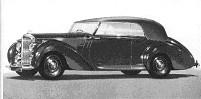
Angels, garland, and lions were a great way to soup up your wheels anywhere between 1700 and 1830. At the time The Fountainhead was written (1946), the best ride around was probably a Bentley like this one.
And today, you know you’ve arrived if you have a playstation, flat screens, and at least one hydraulic powered flip out thingy in your car.
The discussion in Rand's book has stuck with me ever since I first read it, mostly because it has applicability to about 12 different art topics. Whenever one of them comes up this passage pops into my head. Today, I'll limit the discussion to taste. Simply put, taste, aesthetics, beauty, and so on change. It is very tempting to believe that there is a universal beauty out there that touches the soul of every man and woman on earth. When I encounter something of immense beauty I can scarcely comprehend that any one else wouldn't feel what I do. But there always are people out there who don't. Universal aesthetic appeal is a myth.* While this may be disappointing, it opens up worlds of fascinating inquiry into why we like what we do.
*I can think of two possible exceptions to this rather fatalistic pronouncement: nature and children. But people don't design those things. They just come beautiful without help, which is different. And I regretfully speculate that their appeal isn't universal, though I wish it was.
Subscribe to:
Posts (Atom)