12 January 2007

Art Upside Down


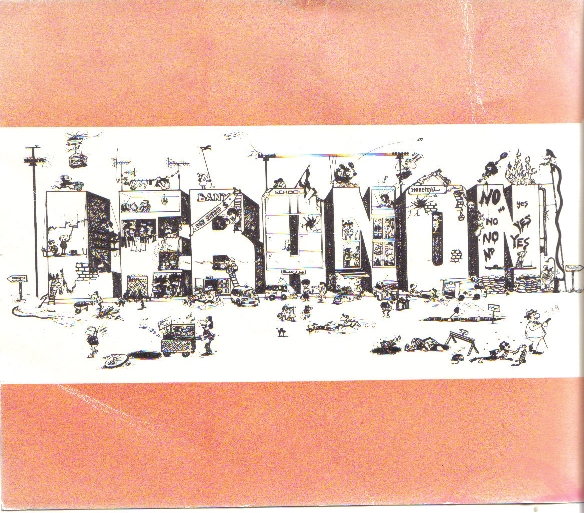
I was rummaging around on-line today and came across this book all about the wonderful world of ambigrams--a word that reads the same if you rotate it 180ยบ. A good, simple example is the little word pod.

Photo credit
The book is called Wordplay, by John Langdon, who is something of an ambigram genius. The title as pictured is itself an ambigram. Of course, in whatever font Impart Art uses, Wordplay fails to look anything at all like itself when flipped upside down. Thus the art (or is it the science?) of ambigrams. To be able to tweak each letter just enough that it could double for something else upside-down is an amazing feat. Not saying it is Art, but an art for sure.

As for Art upside down, you’ve always got George Baselitz.

This is his “Tulips”, 1981, as it appeared in my one-painting-per-day 2003 calendar. Yes, I kept all the pages and in mint condition too.

Flipping words upside down is pretty entertaining, but an upside down image has other connotations. His work raised all kinds of questions about art and the art world. Had it been stood on its head? Some have said that Baselitz wanted to present recognizable things, but also keep the viewer from losing sight of the paint-and-canvasness of any painting. It really is harder to relate to an upside down image, and so you are more likely to notice color, form, composition and less likely to think about who knocked over the tulips.

And now, for the real treat of the post, upside down music. Years ago in middle school, there was a mini-concert during orchestra (third hour, I think). Two violinists, both decent and a year ahead of me, played a duet. They stood facing each other with a single sheet of music placed between them on a table. The one on the left played what he saw from top to bottom, as did the player on the right. In other words, the duet was a single set of notes played right-side-up and up-side-down at the same time.

It is attributed to Mozart, but apparently that is in question. Those of you who want to download a free copy of the duet can do so here. Scroll down until you see the German title “Der Spiegel”, in English, The Mirror.

11 January 2007

That's so Bourgeois


Sometimes, when I’m driving or otherwise bored, I design t-shirts and bumper stickers in my head. On one such occasion, I designed this:

. . . and ever since I’ve been trying to figure out if calling something Bourgeois is an insult.

Turns out it is, at least in some circles:
In the rhetoric of some Communist parties, "bourgeois" is sometimes used as an insult, and those who are perceived to collaborate with the bourgeoisie are called its lackeys. Marx himself primarily used the term "bourgeois", with or without sarcasm, as an objective description of a social class and of a lifestyle based on ownership of private capital, not as a pejorative. He admired the industriousness of the bourgeoisie, but criticised it for its moral hypocrisy. This attitude is shown most clearly in the Communist Manifesto.
(Wikipedia: Bourgeoisie)

Because there is a whole Marxist approach to art criticism (read more about it here, and original sources here)bourgeois is a term I've had floating around in my brain for a while. Before looking it up, I knew of lots of artists who had derided the bourgeois, but also knew that the term basically just meant "middle class". I’ve already acknowledged that I've got a bunch of stuff in my head that I know far too little about, and what I know is generally from the wrong angle. My knowledge of Marx is sort of like what I’d expect the average football enthusiast to know about sewing a sports jersey.

Anyway, I’m still wondering about that idea for a shirt. If I wore it, do you think anyone would understand it? Would anyone feel insulted? Would you wear it? Why or why not?

10 January 2007

Signifier Signified


If you don't get the title, don't worry. I didn't really get it for a long time too.

But then I was driving early in the morning years ago in Utah. There was no one else on the road, and you know how you can see for miles in some places because the valley is so flat. I was at one of those spots where I knew there was no one at all. Anyway, I came to an intersection and the light was red, so I stopped. When it turned green, the following thoughts flashed through my head in very quick succession as I drove on:

"green means go" - "but it doesn't. That color is just called green (a slight distinction, I know) and it only signifies right of way in this limited context."

It was the first time that I really understood the difference between our words and their referents, that it is all a construction and none of it (except words like *BANG*) has any essential connection to the concepts/objects they signify. Why does this matter? What does it have to do with art? Well, of course there's the whole disjuncture between a picture of something and the thing itself--analogous with the division between things and the way we name them.

The thing about art is that it has, for three decades or more, been quite aware of the theory that surrounds it, and again and again, the most successful works of contemporary art are actively involved in pushing the theory onward. Cindy Sherman's myriad images of herself in disguise are a good example of art that points to the fringes where the arguments gets gray and murky and shines a light on it. Sherman's work deserves a post of its own. Maybe next time.

09 January 2007

Art Lounge, Beirut


Back in October I went to the Art Lounge here in Beirut to see a friend's show of photographs from all around Asia. The rather large prints of her work were impressive and I now own three of them (christmas presents from my very put-upon spouse. I mean really. Who would want the task of buying me presents?). While I was at the show, I picked up a freebee postcard to go with the invitation to the show (left).

So, since I'm all interested in the arts and I'm here in Beirut, and the two intersect oh so infrequently, I thought I'd write about the experience at the lounge. First, they aren't kidding about being a lounge. It’s basically a bar/night club with art on the walls. I've never been to any show there except my friend's, so I don't know what else they have had there, so I can't tell you about the general quality of the art side of the "Art Lounge" business. Knowing that there is a lot more night-clubbing than art-going happening in this city, I'd have to guess that they are definitely an ok lounge and as for the general standard of the art . . . who knows.
They had a nice little book/gift shop, but without any art games I went away a bit disappointed. As for the location, it is fairly easy to get to, which is not a given in Beirut. They're right off the Dora highway right at the edge of the Beirut city limits, in just the kind of place that looks just the way dangerous places in the US look. Funny how my whole visual lexicon of places to avoid has been turned on its ear in this place.
Anyway, as a viewer in the gallery/lounge, I was very aware that I was being watched. People lounging with their drinks who might glance over at the exhibition would not be able to help glancing at me too. In a dedicated gallery, you've basically got a definite visual focus--the stuff on display. Everyone is there to see it. But start putting out chairs, tables, finger food and drinks, and all of a sudden, my viewership is being included in the viewership of others.
So, its sort of a strange place--a strange viewing experience. But the lounge makes art a little less rare around here, and that's a step in the right direction.

08 January 2007

More Art Games


Josh's recent posts' conflation of art and games (a genius combination, I think) put me in mind of some of my favorite art games. I've blogged about one already, a memory game based on famous paintings from the Alte & Neue Pinakothek in Munich. This was the first art game I ever owned, and it was followed in quick succession by these:

Going clockwise from the top left, you've got a game about Renaissance paintings (thanks mom!), the collection of the Musee D'Orsay, Color (illustrated with paintings from France's major museums), and French history from pre-history to the first empire (illustrated with a wide variety of art and artifacts). These were mostly picked up in museum gift shops, and their mere existence, I think, covers a multitude of museum-gift-shop sins.

All 4 games work on the same principle: your goal is to collect all seven cards to make a set, and to complete as many of the seven sets (or families in French) as you can. This is done by asking other players for the cards you need or fishing a lucky card from the pot.

I've never won even one round of this type of game. In fact, the smallest one (about French history) made its way into our lives on the trip to Paris with Dan and Bonnie and Samantha in '03. We all played in the train on the way back to Germany, and it was shameful how poorly I did.
The kids aren't quite old enough for this, which means I'm safe for the moment. Once Dandelion is old enough to not try to ingest or crumple the cards, we'll probably get a lot of use out of these, and I'll learn new lessons on facing defeat with grace.

06 January 2007

My *favorite* Artist


I don't have one.

No really.

It would be like a singer having a favorite pitch (so I dearly well hope that you singers out there don't because first, it would ruin my argument and second I would think it was stupid and I'd hate to think so ill of anyone for something so mundane).

Probably most of my close relations would guess that Andy Warhol is my favorite, but that's just because I own a lot of books about him. And I've read all of them, some of them numerous times, and I've used those books in a good deal of Warhol-centric research. But so what. He's not my favorite. I don't have one. Really. What I like most is the relationship among works of art, the kinds of dialogues you can imagine (or prove in some cases) between them, the way one artist's work becomes infinitely more rich when compared with the work of another.

But for those of you who are enamored of favorites of this or any other kind, here's a link to a questionnaire of favorites, famously completed by the young Marcel Proust.

05 January 2007

Innovation


innovative: adjective
1. ahead of the times; "the advanced teaching methods"; "had advanced views on the subject"; "a forward-looking corporation"; "is British industry innovative enough?" [syn: advanced]
2. being or producing something like nothing done or experienced or created before; "stylistically innovative works"; "innovative members of the artistic community"; "a mind so innovational, so original"

This from WordNet® 2.1. Princeton University by way of dictionary.com

I've always thought of innovation as inherently good, useful, and productive (though I couldn't find any dictionary to support my sense of the word). It isn't like invention or creativity. They can be negative. Inventors come up with useles junk all the time, and we've all (at one point or another) been abused by the very annoying creativity of others. But no one ever bothers to say "positive innovation", useful innovation", or "constructive innovation", to give a few examples. To do so would be redundant, at least in our current use of the term.

Given that innovation is seen (by me at least) as relevant, needful, and good, does the ongoing story of art require anything more than this?

04 January 2007

Two Books About Purses


If for no other reason than that I own both the books pictured at left, I am a lucky dog. The top, Handbags, and bottom, Bags, are about, duh, purses. And though they have that in common, there is little else the same about them. First, there isn't much duplicate information in them, even though they cover the same time periods, production sites and techniques. Handbags includes interviews, brief biographies, and brand histories of the best contemporary purse designers and companies. The purses are organized by style, which allows a 2001 Jamin Puech to appear directly before a rare English purse from the 1550s, emphasizing a continuity of sorts--a harmony within this genre that has endured for centuries (see pgs 264-5).

By contrast, Bags is organized first by date, beginning with the oldest surviving examples of purses. Beca
use all the bags of a certain era appear together, it is far easier to imagine the time, appreciate the purse in its context. The emphasis here is on the history of the purse, whereas the Handbags emphasis was on the style of the purse. Bags also offers much more detailed information about materials, construction methods, and the historic context of each period's chosen forms. For example, this about Petit-point, lace and cloth:

Until the nineteenth century, fine needlework was performed not
only by women as a home industry, but also by professional embroiderers. Partly due to technological developments, the variety of needlework techniques increased sharply. Although less very fine needlework was done at that time, there were many techniques for making reticules, such as Berlin woolwork, blackwork, lace, weaving, embroidery, crocheting and knitting.
pg 248

So, there you have it. Both are heartily welcome in my library of things about which I probably know either too much or too little. But since I don't know which it is, I'll stop here.

03 January 2007

My Waning Moments of 2006


Way back at Christmas 2003 Matthew gave me a book making kit, and I have just now gotten around to using it. At first I was quite worried that the included glue would have passed its shelf-life. But it was still functional and so on New Year's Eve I went forward with the project. New Year’s Eve was the perfect time for this. It is the one night of the year when getting into bed late is expected. After the kiddies were snuggly in bed, I had about 4.5 hours to work.

The kit included enough materials for two books and I almost finished both in one night. The instruction booklet said to expect it to take 3 hours, but since this was my first time through the process and I made two of them, I’m content with my turnaround time. And my results aren't too shabby either. I'll post pictures later.

I now know all kinds of bookbinding terminology. The pages are placed together in groups called signatures, which are individually sewn and sewn to each other. The sewing on the fold lines is called a mull, and the pretty band that is placed on the mull at the top and bottom is called a headband. I could go on and on like this, but won’t.

The best part of the process is that I have lots of leftover glue, thread (a nice, sturdy one) and even some special papers. If I got my hands on the other necessities, I’d have the ability to make another book. I really like the idea of that. The books I made require nothing more special than 8½x11 paper and some heavy card-board for the spine and covers. I know my way around papers and fabrics well enough to be able to find buckram and everything else right here.

I've dabbled in bookbinding before, but I've never had instructions, tools or such professional looking results. In comparing my book with other hard-cover books in my house I see little difference in construction or quality, which is impressive.

02 January 2007

Bird Brains


Because I live in a world where on-line shopping is impossible, I haven’t used the web for that kind of thing in a while. That’s probably why I just barely found out about like.com in this Dec 27th WWD article:

Like.com, whose technology allows shoppers to find shoes and accessories using celebrity photos as the basis for search, expanded into apparel on Saturday. Unlike text-based search, where shoppers type words to describe what they are looking for, image search is based on visual properties of an item such as color, texture and shape. . . Like.com did not feature apparel . . . because the variety of ways that clothing is photographed . . . adds complexity to the task of calculating a visual signature for each item . . . Although shoes and watches are photographed in a more consistent manner, making for a simpler calculation, the visual signature for those items still contains some 10,000 data points.

I’ve got the solution for them. Pigeons. And wouldn’t you know, pigeons are also the connecting link between that brief WWD article and your daily installment of Impart Art.

Pigeons "have been shown, by Richard Herrnstein and his associates at Harvard, to be able to categorize pictures by subject, and hence to appreciate the differences between pictures of X and pictures of something else. The basic procedure was simple: the pigeons were trained on a set of slides to pick out the pictures of trees, or bodies of water, or of a specific individual, pecking one disk or the other depending upon pictorial content, and getting rewarded for being right. Once the suite of images was learned, the pigeons were shown novel instances, which they were able to classify with about the same success humans might have. . . .”

That was taken from Arthur Danto’s Beyond the Brillo Box, pg 24. And it is an interesting idea. I would not be surprised if pigeons are many factors better at this kind of work than our most advanced technologies. Pigeons could do that kind of relationship-linking and no one would have to code it. Danto described and then imagined some other advanced uses for the pigeons a few pages later:

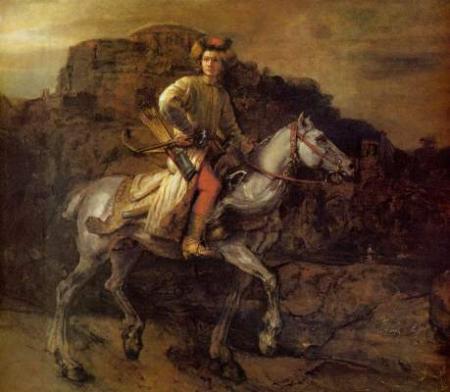
“No one that I know of has as yet trained pigeons to discriminate by style, thought here are fascinating indications that pigeons are easily up to this task. . . . Debra Porter and Allen Neuringer, of Reed College trained pigeons to discriminate between selections from Bach and from Stravinsky. That achieved, they had to decide which of five other composers sounded Stravinsky-like and which Bach-like. Without error, they classed Buxtehude and Scarlatti as Bach-like, Walter Piston and Eliot Carter as Stravinsky-like. They classed Vivaldi however, as Stravinsky-like, leaving it up to us to decide whether they were in error or instructing us in how to think about and listen to Vivaldi. My own feeling at the moment is that I would trust a pigeon more than your standard member of the Rembrandt project on questions of reattribution. I wager The Polish Rider(pictured above) will be returned to the Rembrandt canon if my pigeon colleagues are consulted."
Brillo Box, pgs 28-29.

Ok, so I'm totally sock-knocked-off impressed with pigeons and their remarkable skills and all that, but I'm not sure I trust them to listen to human-made classical music better than humans do. And though the Rembrandt Project has been troublesome in many regards, Danto's insult to their work raises some interesting questions about painting, painters, and viewers. Can a painter eventually be reduced to little more than his style of rendering? What of composition, of subject matter, of materials, of anything, really? Will a computer eventually be able to answer all these unanswered questions, or are pigeons our best hope?

I think they might be for like.com, but I don't know about the rest of it.

22 December 2006

Merry Christmas . . .


. . . and a happy New Year. We'll see you then.

21 December 2006

Better than the Taj Mahal


On our way out of Cairo today, we stopped by the Tombs of Mohammad Ali's Family, which we were told by our (not exaggerating at all) fantastic taxi driver, were worth 950 million dollars. Mohammad Ali was the first Ottoman emperor of Egypt, who came to power in 1811. Apparently they kept slaves and had them killed off to be buried with them.

The tombs were of course very ornate, very Ottoman, and very shabby-chic. 15 Egyptian Pounds, the entry price, is just under $3. I liked the look of the place, and the sun was just right to really illuminate the stained-glass windows. But by the time we got there it was well into the afternoon, we hadn't eaten since 8 am, and we were all a little bit worried about catching our flights (two of sweetie's colleagues joined us). I guess all of those reasons collided in reducing the amount of time we spent there to about 10 minutes.

However, those ten minutes were choice. Our taxi-tourguide sang to demonstrate the acoustics, rhapsodized on the non-violent nature of Islam, gave thorough explanations of the interior and who was buried where and what the tombs were made of, etc. He even accused Matthew of not believing him.

20 December 2006

The Egyptian Museum


I don't remember who, but someone told us recently that we just should not even bother with the Egyptian Museum. I wish I could remember now who said that, since I have bothered with it and can now heartily disagree.

It costs about $9 to get in, which is $9 more than the entrance to the British Museum, but that was ok. The museum had the best collection of Egyptian artifacts I have ever seen. Better than London. Better than Berlin. And I was pleased to finally see some of the statuary that I've had knocking around my brain for a decade now. The trans-gender statue of Akhenaton, for one, but that’s a post for another day.

What impressed me most about the Egyptian Museum is that the experience of it is quite different from other major museums--at least the ones I have visited. When you walk in it is as if you have gone back in time. You leave the contemporary self-obsessed confidence found in most museums. The Egyptian Museum, for lack of a better word, is low-tech. Nothing is guarded by lasers that bounce from ceiling to floor. The exhibits are encased in simple glass and wood. There are no sleekly-designed information placards, just paper, type-written with the most basic descriptions. Instead of accession numbers that tell you where and when a piece was discovered, there are at times old photographs of piles of numbered things, and somewhere in that pile is the object in the case. Huge enlargements of similar excavation photos are propped up against the walls, as if no more elegant presentation were possible or necessary. There was, throughout the museum, enough dust to convince anyone that museums might still house hidden treasures. The lighting was terrible. The jewelry was positively inspirational.

What I liked best was that the museum shop sold postcards and books. Nothing else. No neck-ties printed to look like mummies. No recreations. No erasers or chocolates molded to look like ankhs.

18 December 2006

Artistic Economy


This from M.F.K. Fisher's introduction to Map of Another Town:

Often in the sketch of a portrait, the invisible lines that bridge one stroke of the pencil or brush to another are what really make it live. This is probably true in a word picture too. The myriad undrawn unwritten lines are the ones that hold together what the painter and the writer have tried to set down, their own visions of a thing: a town, one town, this town.
Not everything can be told, nor need it be, just as the artist himself need not and indeed cannot reveal every outline of his vision.


I remember one of my favorite passages of one of the Ramona Quimby books described in great detail how Beatrice, Ramona's older sister, labored over a drawing of a fantasy dinosaur, determined not to over-do it. Often the true difficulty of art is not getting a point across. The difficulty is doing it without doing too much. It is probably one element of genius to give just enough and not over do it.

16 December 2006

Egypt at Stake


My husband is ill. Violently. He and the girls are resting right now, and well, you know what I’m doing.

We have tickets to go to Cairo on Monday evening, but if my sweetie’s health doesn’t improve quickly, none of us will go. Tagging along on business trips is just like that.

Still, I have Cairo on my mind, and particularly their ancient treasures. I don’t know anyone who isn’t at least a little bit curious about the pyramids, temples, and other ruins of long-gone dynasties. To young Americans, they are among the most familiar of foreign, exotic things. When I was a kid, my parents had a subscription to National Geographic, but also to their jr. version called World. If my memory serves (it doesn’t), every single issue was devoted to Tutankhamen’s tomb.

National Geographic has a great Egypt page. Very informative for people going there literally or virtually. They have a list of sources for further reading and even a list of their own publications about Egypt going back to 1913.

Interestingly, they didn’t include what I think was one of their most significant issues. From what I’ve been able to put together, the Feb 1982 issue was almost entirely devoted to the foregoing century’s discoveries and excavations in Egypt. That issue isn't listed on the current Egypt page. Maybe the reason they don't reference this issue is that the pyramids depicted on the front cover were digitally manipulated to squash them into the available (narrow) space. The ethics of their alteration of the pyramid’s positioning has prompted quite a bit of discussion. Just do a Google search for "National Geographic 1982 Giza".

I don’t know if the 1982 issue was left off the source list for this reason or for no reason at all. If it was deliberately left out, that would signal that NatGeo agrees that its reliability is in question. But there’s a lot to be said for the “no reason at all” argument. They didn’t say their bibliography was a complete one.

I’ve never really been able to decide where I stand on this issue. Digitally shifting a pyramid to the side is not the same as lying about its entire existence, or putting it into the mountains of China. The pyramids are where they belong even if they aren’t exactly there. But National Geographic is a respected source of both excellent scholarship and excellent photography. If they are to be regarded as the standard-bearers for the crossover between art-photography and scholarship, suddenly even a slight "reinterpretation" of where a pyramid actually is really undercuts their reputation.

15 December 2006

Kansas Painting


I was looking through my photos today, looking for any picture that I might have taken of some art somewhere in the last two years. I was looking for something from Lebanon. But I found this:

What you see there are two painted clowns bookended by three of my blood relations. While we were avoiding the summer's war, I was fortunate enough to go apple picking on one very fine day in September. These clowns were part of the gig.

I had entirely forgotten that they were there until I saw the picture. Now, I'm completely convinced that they were in fact there, even though I really have no recollection of it. And the more I consider it, the more I am sure that I actually do have a vague memory of those silly cut-out clowns.

That's the power of a photograph. It gave me a memory that even my own brain did not. I'm not saying this is art, just commenting on one of the many assumptions that each of us bring to a photographic image.

14 December 2006

The New Beautiful


I just read the NYT’ rather ironic, (and I conclude) unfavorable review of The Architecture Of Happiness by Alain de Botton, which contained this little, priceless gem:

As John Ruskin observed, we don’t want our buildings merely to shelter us; we also want them to speak to us. But of what? De Botton has an answer. Great buildings, he says, “speak of visions of happiness.”

Up until the precise moment, I really did believe that beauty was the most subjective of all things, but de Botton has shown me my error. But really, could happiness become the new beauty? All chiding aside, I’d like to read that book. I’ve added it to my list of books to test drive at the library just as soon as I live in a country that has one to patronize.

13 December 2006

Jasper Johns


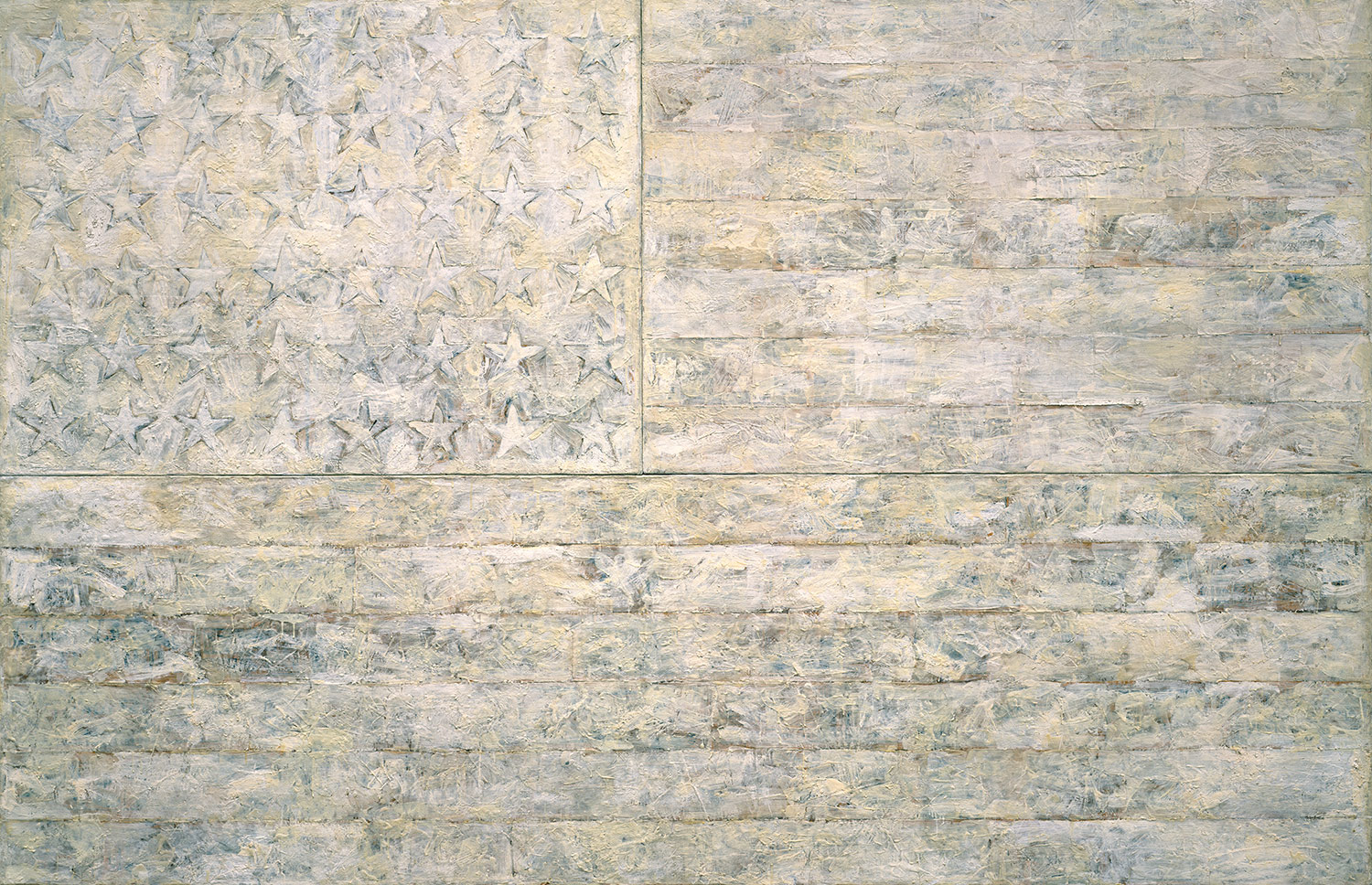
Sorry to be so self-referential, but I also promised in the very comment thread that inspired yesterday’s musings to tell you all what I think about Jasper John’s White Flag. So, here’s a bit about that.

Most of what I know about Jasper Johns actually is stuff that I came across entirely unintentionally. He was one of Warhol’s contemporaries, and because of that, a lot of books about one mention the other. They were both significant, distinct forces. Anyway, Johns was really young when he became really famous and that somehow seems to have worked out. Warhol, by all accounts was envious of Johns, and his early work reflects that—some flattery-in-the-form-of-imitation, if you will. Johns’ paintings have been sold for more money than those of any other painter alive today. The most expensive one? 80 million. And they say the arts don’t pay.

Anyway, the cool things about White Flag are numerous. Most of these start with the flag itself and all the messages that they bring with them. Move it into the art scene of the mid 1950s, with its cares and concerns and those messages multiply.

Flags. They’re like pictographs, really. Any *real* American can tell you that there are 13 stripes for the 13 colonies that broke away from Britain, 50 stars represent each of the current states. We also have so much associated with this flag—seeing it draped over the coffins of dead soldiers and presidents, flown at half-mast, waved proudly every July 4th, Memorial and Veteran’s Day. We watched it be burned in acts of civil disobedience and International protest. We’ve seen it printed in the kitschiest fashion on t-shirts and coffee mugs. We even have songs about our flag.

So the US flag is a loaded symbol, particularly for Americans but (risking arrogance yet knowing I’m right) for every one else too. Merge that flag with white and suddenly you have all the connotations of surrender. I wonder if he was going for that or if he was instead exploring the design of the flag, maybe in an effort to assert that his painting isn’t a flag at all. It's a painting.

12 December 2006

Insult Art


This comment was left by Suz about five months ago when I featured Jasper John's White Flag in this post:

i thought it was interesting that johns was described as a neo-dadaist as well as a pop artist. that made me think of a question i'v been meaning to ask you. i was having an art discussion with my roommate who is a tattoo artist/painter, in which he commented "as an artist, i think that stuff like duchamp's 'fountain' is the biggest insult to the work i do" i'm rather curious about your thoughts on this- might make a good upcoming post, maybe?

Thanks for the question. I hope I can provide a satisfactory response, even though the closest I have ever come to "body art" are those face-painting booths at carnivals.

My first thought is that, tattoo artists are very likely quite good at getting a butterfly to look like a butterfly, or an anchor to look like an anchor. Because of this your roommate probably sees craftsmanship as an integral part of what it is to create art. Tattoos, frankly, have to meet certain visual expectations. No one wants bumbling imperfection burned into their flesh. And having painted faces a time or two myself, I recognize that flesh is not the easiest foundation for such work.

In addition to good technique, I'd imagine that a tattoo artist also needs at least a little artistic feeling. Probably, there are customers out there who are not satisfied with the same old tattoo that everyone else already has. Creativity, improvisation, even thoughtful re-interpretation are skills that such an artist would likely do well to have in his arsenal. Otherwise, people could just get branded and have the whole thing done in one very painful go.

In the case of the tattoo-artist-friend-roommate, my guess is that he sees Duchamp's work as an insult to the requisite technique of his medium--as an insult to anyone who has acquired that skill through hard work, practice, maybe a few black-eyes if it went wrong . . .

Fountain can be seen as an insult to certain definitions of craftsmanship, but I don't see it as an insult to craftsmanship itself. Duchamp's interest was in searching out the fringes, the gray area between art and not art. His Fountain was less an assertion than this question: "can it still be art, even though there is no reason for it be except that I say it is?" Ever since, that question has driven art and artists and has become one of art's most productive inquiries of the 20th century.

Rather than insulting fields that require high levels of skill and technique, I believe Fountain simply differentiates itself from them. Art can be found in exquisite craftsmanship, but after Fountain, it can be found elsewhere too.

11 December 2006

Art History: Problematic Situation #7


This is another installment in an ongoing series.

Back when I first came across Art History as a discipline—a major study option at the university—I imagined it would be something like history from the perspective of art. I thought of the world civilization courses that I’d had in the past and envisioned a place where art would play a bigger role in essentially the same discussions of the past.

Oh, no. No, no, no.

Art History is the history of art. Certainly, one could use art to tell the history of a group, people, culture, or slice of time. I think it would work quite well, too. But after all the studying, reading, learning, researching, etc. that I have engaged in over the last decade-and-then-some, I find that I still could tell you very little about the historic events that surrounded and in some cases created the art and theory about which I (immodestly) know buckets.

This, I suppose should be the first of Art History’s Problematic Situations. It causes a foundation-level tension between historiography and the far more limited task of charting art’s history. And though Art History is at times undermined and crippled by its own issues, history proper is nothing if not worse.

10 December 2006

Book Review: Can You Find It, Too?


Sadly, I don't have very many art books for children, but I do have Can You Find It, Too? (Thanks Bonnie!), which showcases some of the amazing art at the Metropolitan Museum. It works like Where's Waldo, except that it isn't Waldo and the visual style of each scene differs by centuries, continents, and media. I love the variety in this book, and the things that you search for are surprising and perfect for little kids. In one image (probably 1920s) of the seashore, packed with families, children, and dogs, you get to find among many other things, the one and only dog on a leash. In another picture from the 1700s of a busy Chinese city there are very few children, but only two women. An ancient Egyptian Hieroglyph has only one falcon, but 22 eyes and 30 feet, and your job is to find them all.

If you read the reviews at Amazon’s website, you'll see that there are some who think a few images are too violent, and they are probably right. Beheadings aren't really for little tykes. But as a mom who unconcernedly handed this book to my children, who am I to judge?

07 December 2006

Es Weihnachtet Sehr


We will now depart from Impart Art's normal features to present this report on festive goings-on

Tuesday night the girls, in proper German fashion, each put a boot outside our front door. There was an old legend, I told them, that Santa had been sent on an errand to leave candy at the homes of all the good girls and boys. To let Santa know where to find you, all you have to do is put your boot out for him. So, we did. After they were in bed, I filled each boot (a rather tight squeeze) with the things you see the girls enjoying below:


I expected that the girls would forget overnight what they’d done with their boots, but they didn’t. Before enjoying their treats though, we delivered two paper Christmas trees with candy taped on them to our neighbors. We tried very hard to be silent and sneaky in the stairwell.

This year, the smallest chocolate santas were the ones made by the Kinderschokolade people, which is why they are white inside. I had to get small ones because tiny kids have tiny boots. Yes, Dandelion has her chocolate santa and Star's. Star was bored with candy by the time I got this picture. What you can't see is how Dandelion struggled to hold both santas, her marshmallow rope, and eat gummy bears out of a little sack all at once.

05 December 2006

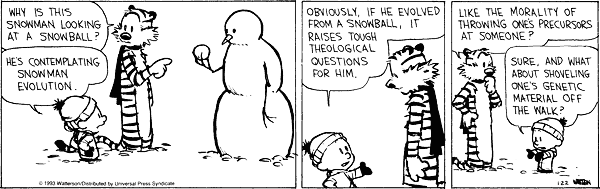
I Miss Bill Watterson


Go ahead, click it, make it big enough to read.


And, because I'm aching to get in trouble for something, here's a speech Watterson gave that I most definately don't have permission to republish. I nevertheless believe that it is among the most worthwhile reading a person could do. I dare you to read it all, and if you can manage it, leave me a comment with your favorite line in it, or if you are a compelte weirdo, your least favorite line.

****

Speech by Bill Watterson
Kenyon College, Gambier Ohio, to the 1990 graduating class.
SOME THOUGHTS ON THE REAL WORLD BY ONE WHO GLIMPSED IT AND FLED
Bill Watterson
Kenyon College Commencement
May 20, 1990

I have a recurring dream about Kenyon. In it, I'm walking to the post office on the way to my first class at the start of the school year. Suddenly it occurs to me that I don't have my schedule memorized, and I'm not sure which classes I'm taking, or where exactly I'm supposed to be going.

As I walk up the steps to the postoffice, I realize I don't have my box key, and in fact, I can't remember what my box number is. I'm certain that everyone I know has written me a letter, but I can't get them. I get more flustered and annoyed by the minute. I head back to Middle Path, racking my brains and asking myself, "How many more years until I graduate? ...Wait, didn't I graduate already?? How old AM I?" Then I wake up.

Experience is food for the brain. And four years at Kenyon is a rich meal. I suppose it should be no surprise that your brains will probably burp up Kenyon for a long time. And I think the reason I keep having the dream is because its central image is a metaphor for a good part of life: that is, not knowing where you're going or what you're doing.

I graduated exactly ten years ago. That doesn't give me a great deal of experience to speak from, but I'm emboldened by the fact that I can't remember a bit of MY commencement, and I trust that in half an hour, you won't remember of yours either.

In the middle of my sophomore year at Kenyon, I decided to paint a copy of Michelangelo's "Creation of Adam" from the Sistine Chapel on the ceiling of my dorm room. By standing on a chair, I could reach the ceiling, and I taped off a section, made a grid, and started to copy the picture from my art history book.

Working with your arm over your head is hard work, so a few of my more ingenious friends rigged up a scaffold for me by stacking two chairs on my bed, and laying the table from the hall lounge across the chairs and over to the top of my closet. By climbing up onto my bed and up the chairs, I could hoist myself onto the table, and lie in relative comfort two feet under my painting. My roommate would then hand up my paints, and I could work for several hours at a stretch.

The picture took me months to do, and in fact, I didn't finish the work until very near the end of the school year. I wasn't much of a painter then, but what the work lacked in color sense and technical flourish, it gained in the incongruity of having a High Renaissance masterpiece in a college dorm that had the unmistakable odor of old beer cans and older laundry.

The painting lent an air of cosmic grandeur to my room, and it seemed to put life into a larger perspective. Those boring, flowery English poets didn't seem quite so important, when right above my head God was transmitting the spark of life to man.

My friends and I liked the finished painting so much in fact, that we decided I should ask permission to do it. As you might expect, the housing director was curious to know why I wanted to paint this elaborate picture on my ceiling a few weeks before school let out. Well, you don't get to be a sophomore at Kenyon without learning how to fabricate ideas you never had, but I guess it was obvious that my idea was being proposed retroactively. It ended up that I was allowed to paint the picture, so long as I painted over it and returned the ceiling to normal at the end of the year. And that's what I did.

Despite the futility of the whole episode, my fondest memories of college are times like these, where things were done out of some inexplicable inner imperative, rather than because the work was demanded. Clearly, I never spent as much time or work on any authorized art project, or any poli sci paper, as I spent on this one act of vandalism.

It's surprising how hard we'll work when the work is done just for ourselves. And with all due respect to John Stuart Mill, maybe utilitarianism is overrated. If I've learned one thing from being a cartoonist, it's how important playing is to creativity and happiness. My job is essentially to come up with 365 ideas a year.

If you ever want to find out just how uninteresting you really are, get a job where the quality and frequency of your thoughts determine your livelihood. I've found that the only way I can keep writing every day, year after year, is to let my mind wander into new territories. To do that, I've had to cultivate a kind of mental playfulness.

We're not really taught how to recreate constructively. We need to do more than find diversions; we need to restore and expand ourselves. Our idea of relaxing is all too often to plop down in front of the television set and let its pandering idiocy liquefy our brains. Shutting off the thought process is not rejuvenating; the mind is like a car battery-it recharges by running.

You may be surprised to find how quickly daily routine and the demands of "just getting by: absorb your waking hours. You may be surprised to find how quickly you start to see your politics and religion become matters of habit rather than thought and inquiry. You may be surprised to find how quickly you start to see your life in terms of other people's expectations rather than issues. You may be surprised to find out how quickly reading a good book sounds like a luxury.

At school, new ideas are thrust at you every day. Out in the world, you'll have to find the inner motivation to search for new ideas on your own. With any luck at all, you'll never need to take an idea and squeeze a punchline out of it, but as bright, creative people, you'll be called upon to generate ideas and solutions all your lives. Letting your mind play is the best way to solve problems.

For me, it's been liberating to put myself in the mind of a fictitious six year-old each day, and rediscover my own curiosity. I've been amazed at how one ideas leads to others if I allow my mind to play and wander. I know a lot about dinosaurs now, and the information has helped me out of quite a few deadlines.

A playful mind is inquisitive, and learning is fun. If you indulge your natural curiosity and retain a sense of fun in new experience, I think you'll find it functions as a sort of shock absorber for the bumpy road ahead.

So, what's it like in the real world? Well, the food is better, but beyond that, I don't recommend it.

I don't look back on my first few years out of school with much affection, and if I could have talked to you six months ago, I'd have encouraged you all to flunk some classes and postpone this moment as long as possible. But now it's too late.

Unfortunately, that was all the advice I really had. When I was sitting where you are, I was one of the lucky few who had a cushy job waiting for me. I'd drawn political cartoons for the Collegian for four years, and the Cincinnati Post had hired me as an editorial cartoonist. All my friends were either dreading the infamous first year of law school, or despondent about their chances of convincing anyone that a history degree had any real application outside of academia.

Boy, was I smug.

As it turned out, my editor instantly regretted his decision to hire me. By the end of the summer, I'd been given notice; by the beginning of winter, I was in an unemployment line; and by the end of my first year away from Kenyon, I was broke and living with my parents again.

You can imagine how upset my dad was when he learned that Kenyon doesn't give refunds.

Watching my career explode on the lauchpad caused some soul searching. I eventually admitted that I didn't have what it takes to be a good political cartoonist, that is, an interest in politics, and I returned to my firs love, comic strips.

For years I got nothing but rejection letters, and I was forced to accept a real job.

A REAL job is a job you hate. I designed car ads and grocery ads in the windowless basement of a convenience store, and I hated every single minute of the 4-1/2 million minutes I worked there. My fellow prisoners at work were basically concerned about how to punch the time clock at the perfect second where they would earn another 20 cents without doing any work for it.

It was incredible: after every break, the entire staff would stand around in the garage where the time clock was, and wait for that last click. And after my used car needed the head gasket replaced twice, I waited in the garage too.

It's funny how at Kenyon, you take for granted that the people around you think about more than the last episode of Dynasty. I guess that's what it means to be in an ivory tower.

Anyway, after a few months at this job, I was starved for some life of the mind that, during my lunch break, I used to read those poli sci books that I'd somehow never quite finished when I was here. Some of those books were actually kind of interesting. It was a rude shock to see just how empty and robotic life can be when you don't care about what you're doing, and the only reason you're there is to pay the bills.
Thoreau said,

"the mass of men lead lives of quiet desperation."

That's one of those dumb cocktail quotations that will strike fear in your heart as you get older. Actually, I was leading a life of loud desperation.

When it seemed I would be writing about "Midnite Madness Sale-abrations" for the rest of my life, a friend used to console me that cream always rises to the top. I used to think, so do people who throw themselves into the sea.

I tell you all this because it's worth recognizing that there is no such thing as an overnight success. You will do well to cultivate the resources in yourself that bring you happiness outside of success or failure. The truth is, most of us discover where we are headed when we arrive. At that time, we turn around and say, yes, this is obviously where I was going all along. It's a good idea to try to enjoy the scenery on the detours, because you'll probably take a few.

I still haven't drawn the strip as long as it took me to get the job. To endure five years of rejection to get a job requires either a faith in oneself that borders on delusion, or a love of the work. I loved the work.

Drawing comic strips for five years without pay drove home the point that the fun of cartooning wasn't in the money; it was in the work. This turned out to be an important realization when my break finally came.

Like many people, I found that what I was chasing wasn't what I caught. I've wanted to be a cartoonist since I was old enough to read cartoons, and I never really thought about cartoons as being a business. It never occurred to me that a comic strip I created would be at the mercy of a bloodsucking corporate parasite called a syndicate, and that I'd be faced with countless ethical decisions masquerading as simple business decisions.

To make a business decision, you don't need much philosophy; all you need is greed, and maybe a little knowledge of how the game works.

As my comic strip became popular, the pressure to capitalize on that popularity increased to the point where I was spending almost as much time screaming at executives as drawing. Cartoon merchandising is a $12 billion dollar a year industry and the syndicate understandably wanted a piece of that pie. But the more I though about what they wanted to do with my creation, the more inconsistent it seemed with the reasons I draw cartoons.

Selling out is usually more a matter of buying in. Sell out, and you're really buying into someone else's system of values, rules and rewards.

The so-called "opportunity" I faced would have meant giving up my individual voice for that of a money-grubbing corporation. It would have meant my purpose in writing was to sell things, not say things. My pride in craft would be sacrificed to the efficiency of mass production and the work of assistants. Authorship would become committee decision. Creativity would become work for pay. Art would turn into commerce. In short, money was supposed to supply all the meaning I'd need.

What the syndicate wanted to do, in other words, was turn my comic strip into everything calculated, empty and robotic that I hated about my old job. They would turn my characters into television hucksters and T-shirt sloganeers and deprive me of characters that actually expressed my own thoughts.

On those terms, I found the offer easy to refuse. Unfortunately, the syndicate also found my refusal easy to refuse, and we've been fighting for over three years now. Such is American business, I guess, where the desire for obscene profit mutes any discussion of conscience.

You will find your own ethical dilemmas in all parts of your lives, both personal and professional. We all have different desires and needs, but if we don't discover what we want from ourselves and what we stand for, we will live passively and unfulfilled. Sooner or later, we are all asked to compromise ourselves and the things we care about. We define ourselves by our actions. With each decision, we tell ourselves and the world who we are. Think about what you want out of this life, and recognize that there are many kinds of success.

Many of you will be going on to law school, business school, medical school, or other graduate work, and you can expect the kind of starting salary that, with luck, will allow you to pay off your own tuition debts within your own lifetime.

But having an enviable career is one thing, and being a happy person is another.

Creating a life that reflects your values and satisfies your soul is a rare achievement. In a culture that relentlessly promotes avarice and excess as the good life, a person happy doing his own work is usually considered an eccentric, if not a subversive. Ambition is only understood if it's to rise to the top of some imaginary ladder of success. Someone who takes an undemanding job because it affords him the time to pursue other interests and activities is considered a flake. A person who abandons a career in order to stay home and raise children is considered not to be living up to his potential-as if a job title and salary are the sole measure of human worth.
You'll be told in a hundred ways, some subtle and some not, to keep climbing, and never be satisfied with where you are, who you are, and what you're doing. There are a million ways to sell yourself out, and I guarantee you'll hear about them.

To invent your own life's meaning is not easy, but it's still allowed, and I think you'll be happier for the trouble.

Reading those turgid philosophers here in these remote stone buildings may not get you a job, but if those books have forced you to ask yourself questions about what makes life truthful, purposeful, meaningful, and redeeming, you have the Swiss Army Knife of mental tools, and it's going to come in handy all the time.

I think you'll find that Kenyon touched a deep part of you. These have been formative years. Chances are, at least one of your roommates has taught you everything ugly about human nature you ever wanted to know.

With luck, you've also had a class that transmitted a spark of insight or interest you'd never had before. Cultivate that interest, and you may find a deeper meaning in your life that feeds your soul and spirit. Your preparation for the real world is not in the answers you've learned, but in the questions you've learned how to ask yourself.

Graduating from Kenyon, I suspect you'll find yourselves quite well prepared indeed.

I wish you all fulfillment and happiness. Congratulations on your achievement.

Bill Watterson

04 December 2006

A Nation Divided Against Itself


In two months and 10 days, Lebanon will certainly commemorate the death of Rafik Hariri, whose assassination marked the beginning of the turmoil that has gripped Lebanon for the past two years. From the beginning, it was assumed that Syria was to blame for Hariri’s death. One month after the assassination, hundreds of thousands of Lebanese descended on Beirut’s central district to express their anger at the Syrian-backed leadership of their country. They called for the immediate withdraw of Syria from Lebanon. With the help of the international community acting through the United Nations, Syrian troops were removed from the country, but their influence lingered. If the UN investigative body is to be believed, Syria’s influence in the country has been evidenced by a steady trail of assassinations spread over the past two years.

Why then, is the current political climate pro-Syrian? Why are there hundreds of thousands of Lebanese demonstrating in favor of the very leadership that was blamed for Hariri’s death? Well, lets not forget the summer’s war. Although the United States was quick to express concern for Lebanon when Syria was seen as the culprit, they turned a blind eye when Israel came knocking. The UN peacekeepers at the boarder did not prevent or intervene in the hostilities. There they were, doing nothing.

So Hezbollah was the closest thing to a defender that the south had. There was every appearance at the beginning that Israel was going to do to Lebanon what it had been doing to Gaza for weeks—strangle, starve, and suffocate. And it didn’t happen. Israel essentially gave up the fight. No wonder Hezbollah has claimed a divine victory. No wonder so many Lebanese see it that way.

But there are many others who don’t. Every day, I see people in number heading downtown to continue the ongoing protests intended to bring down the western-leaning government. And every day, as I walk or drive through the city, I see Lebanese flags hanging from balconies—the sign of those who despite the war are still against Syrian interference.

Recently, the New York Times reviewed an art exhibit here in Lebanon, aimed at identifying what it is to be Lebanese and what their country ought to become. The author observed, “all of the main . . . confessional communities (Christian, Sunni, Shiite, Druse), want a Lebanon united by their definition of what Lebanon should be.” Each sect believes they are the real Lebanon.

The article made some valuable observations on contemporary divisions within the country, and for that it was worth a read. But I’m not sure the art at the center of it would be worth looking at. There were only a few, bad photos of the show and the descriptions given by the author were lifeless.

03 December 2006

Media and the Real


I’ve just listened to an interesting NPR story about a prisoner at Auschwitz who was assigned to paint watercolor portraits of her fellow prisoners because (according to the Nazi commander there) photographs simply weren’t satisfactorily capturing the degenerate qualities of the gypsies.

Here is one such image. It was painted by Dina Gottliebova Babbitt, who is now 83 years old and wants ownership of her work. The Auschwitz museum claims ownership of anything that serves as evidence of the place's history.

NPR’s story wasn’t about the merits of photos vs. paintings, but I can't help thinking about that. I’ve been wondering if artists choose to do what they do. My guess is that it is rarely a case where a person weighed the options and chose one medium over the other. More often than not, people go with the medium they happened to learn before they really thought about being an “artist”, be it drawing, photography, or even the new technology-media. There's usually a predisposition. But here, it was a clear choice, and a completely backward seeming one.

Nobody today, except in closed court rooms, would turn to a painting for evidence. Photographs, which make the most credible appeal to reality of any of art’s expressive forms, were thought “not real enough” in this case. It seems like proof enough to me that what the Nazi’s saw in these lesser races was a projection of their inner horrors. Why else would a subjective art, like painting, be seen as more accurate than a documentary photography?

02 December 2006

Tea Time


I took a class about the arts associated with Zen and Tao shortly before we moved to Beirut. I was fascinated by the subject matter, delighted by the application of these philosophies/religions to the arts, culture, and even aspects of daily living. The harmony among these seemingly divided pursuits appealed to my sense of universalism. That art, belief, and life are all part of the same big picture is something that I have always felt anyway.

Among the arts that Zen influences is the tea ceremony. There are whole books, some of them ancient, about how to properly prepare, present, and drink tea. They describe in detail the correct proportion and appointment of the room, the manner of the guests, their optimal mode of dress, arrival, and conversation.

Tea continues to be an art in Japan, and a ritual in Britain. It was neither in my childhood home. My mother drank tea only when she was ill, and encouraged all of us to do the same. She drank an infusion called ‘rose-hip’ which still makes me think of head colds and flu bugs. I have no memory of ever taking her up on her offer, but she still swears by it.

Later, when I was an adult and went a-traveling, I discovered that with enough sugar anything tastes great, and a hot cup of anything takes the edge off a cold day. I began experimenting with my favorite drinks and found that flat soda is down right divine hot. Root Beer becomes sassafras tea. Sprite becomes a delicate lemony delight.

I don’t care for sugar as much as I used to, which I guess means I’m getting old. It actually makes my mouth ache. Plus, I never have flat soda around like I did when I was single. The stuff gets consumed before it has a chance to fizzle out. When I went to London last month I had the best cup of peppermint tea that I have ever had. I had it without sugar because there was no sugar on my table. And I admit, I’m hooked. Every morning since I got back to Beirut I’ve had a cup of peppermint tea. A box of individually wrapped bags had been lurking in our cabinet since the beginning of 2005.

Some of you know that I was learning French this summer, and lets just say I’m still an absolute beginner. I can’t even say “I’m learning French” in French. Today that came back to bite me when, at the grocery store I bought green tea with peppermint instead of peppermint all by itself because I didn’t bother to realize that vert means green.

It smells fantastic.

I can not find even one authoritative source that indicates its status within the LDS church’s dietary guidelines. I’ve done all the research I can, and I have come to what I think is a very safe conclusion about it. Does anyone out there have access to anything authoritative about this?

01 December 2006

That's pretty good for a . . .


Consider this:

When asked to provide details about his life to a curator, the painter Balthus sent the following telegram in reply: "No biographical details. Begin: Balthus is a painter of whom nothing is known. Now let us look at the pictures. Regards. B." Balthus was rebelling against the modern fondness for viewing an artist's output through the prism of his public image. He worried that once an artist's personal life was known, his work would be seen only as a means of diagnosing the artist's psychological shortcomings and not as an end in itself. (found here)

So, do Vincent's letters to Theo make Starry Night a better picture? Did Warhol's attention-craving-madness make his silkscreenes art? Would it have mattered if Jackson Pollock had instead been Jackie? What if Picasso hadn't been a womanizer?

Pictures rarely, if ever, stand alone. There is always a context, a background, an origin. All too often, a person's lifestyle choices are seen as an integral part of the images they make. But what if everything we (think we) know is wrong? Do we read art one way for a suicide, and another way for death by natural causes? Do we read the art by men one way and women another? What exactly are our foregon conclusions about a life that are transposed onto the image we see?

29 November 2006

24 November 2006

Star & Dandelion


As you all ought to know, I have two charming kids, and to protect the innocent, we'll call the oldest child star and the youngest dandelion. On frequent occasion, my interest in art gets taken out on them. It happened again not long ago. Matthew showed me a link to a neat little webpage where you can make a simulated Pollock "drip painting" just by waving the mouse over the formerly blank canvas--err, screen. Of course, I immediately set the Jr.s down to try it. Neither one is a very good fake Pollock, but both are pretty good additions to Star and Dandelion's art escapades. Can you guess who did which painting?
(readers of character will resist the urge to cheat)

22 November 2006

What I did last night.


It started with these doors that I found at the Metropolitan Museum's website. I repeated the image a few times, and then I started to map some of the geometry. Fun, fun, fun. Really.


I hope you’ve clicked the link to see the original. It is small, and although the design wouldn’t need to infinitely repeat to fill such a small place, it can and as my image shows, it can very well.

I’ve always enjoyed geometry. That was the only class I took in high school where the subject matter (rather than a charismatic teacher) was remotely interesting.

Whoever created this specific pattern did a few things that show a remarkable amount of artistry, or bending of geometry’s rules. The resolution of a square into a circle, of a triangle into a hexagon, the kind of stair-step alignment of the stars, etc. These are not perfect shapes, but shapes that have been slightly pushed and pulled to make the overall pattern work. I am baffled by this kind of art (craft?) because although I can find fun patterns in it, I doubt I could design this or something like it, and there are many variations on this kind of pattern that look quite a bit like this one but are different enough to have required a bit of genius.

21 November 2006

We are Safe


But here's why that's news today.

Here's your art idea for the day:

“a picture of a dead dog shows a dead dog. It only becomes difficult when you want to communicate something beyond that, when the content is too complicated to be depicted with a simple portrayal”
Gerhardt Richter (Harrison and Woods 1037)

20 November 2006

Age-value and Art


Back in early October, I went to an antique dealer in town who I knew sold old pointed-arch window frames. The man selling them wanted $150 for the ones about a meter high, $200 for the larger ones. As is. And they were a mess. They had obviously been left out in the rain, there were chunks missing, no or broken glass, peeling paint, etc. I pointed all that out to the man and offered him $20.

Looking back on it, I think he was probably offended that I, a foreigner, would dare to think that one of the region’s treasures could be worth so little. After all, these are not really being made anymore, apparently came from palaces and their origins, age, and relative rarity adds value. But I disagree. The window frames were in terrible shape. They might as well be garbage or firewood and nobody pays even so much as $20 for a few scraps of wet wood. I still can’t believe that he thought $150 was a possible price. He offered to lower it to $130, but that was his final offer. So I, very satisfied with NOT buying one, went home.

Anyway, I’ve been thinking about age-value and art and wondering what it all means. The assertion that age=art comes down to everything eventually becoming art if you just wait long enough.

In some cases, age does add value. Like Greek vases, hand made lace, etc. Especially when a craft is lost it has a much higher chance of becoming an art. But alas, the carpentry of making a pointed arch is not lost at all, and arguing that an old, decaying window frame is somehow worth more because it is too broken to possibly serve its purpose is crazy.

17 November 2006

A little Agitprop


I found this today and thought of Terra.

16 November 2006

Blog Indeed


So Katie left a comment on my blog that basically said, “you suck at blogging”, which is true. The fact that I haven’t made a post in more than a few months is proof enough of that.

Do you want an art idea anyway? That’s why you’re reading this isn’t it?

“The horror is this . . . to speak of the “nothing to say”. Roland Barthe’s Camera Lucida 92-93.

But for the sake of posting something more, we’ll indulge in a little apologetics—not that it matters or that it has anything to do with art:
1. I’m busy
2. I have to write all the time and I get tired of it.
3. Blame Lebanon
4. I am knee-deep in plans for Christmas because I am an incurable Christmas-freakazoid.
5. My children are more important
6. My thesis is more important.
7. I have to think about art all the time and I get tired of it.
8. Gearing up for the 10k
9. My kids. If everyone had this much huggable cuteness around then no one would blog.

21 July 2006

The First World


For most of my life I have admired the beauty that is there to be found in dirt, in ugliness, in the mundane. I've had a lot of opportunity to appreciate that kind of aesthetic in Beirut, I've seen it in my books about Damascus, and driving from the Jordanian border to Amman led me to believe that Jordan's also got something of a shabby-chic aesthetic. This kind of beaty within the ashes is at times overwhelming, and I find it much more moving than the beauty of cleanness.

I have often wondered why this would be, why I would be so moved by the discovery of visual perfection in the worn out, broken, dirty, grimy patches of life. And now I think I have the answer. Growing up in the US there was a lot of clean. Germany is even worse (better?). When you see something truly falling apart at the seams it is the exception, not the rule. I think my eye was drawn to these hideous exceptions because of their rarity. Beauty of this kind was completely organic, spontaneous, an accident. Clean is never an accident.

As we move west, I'm noticing a lot of clean. Huge, expansive, seemingly unending stretches of super-clean, super-new, super-nice public space. Looking around the Tel Aviv airport I almost feel like I'm watching a movie or having a dream. No garbage. No broken floor tiles. No dirt. Anywhere. Welcome to the First World.

Clean like this, is indeed overwhelming, and to my used-to-the-grime eyes, and even beautiful.

20 July 2006

Tel Aviv

We have tickets for tomorrow evening. Amman to Tel Aviv, Tel Aviv to Atlanta, to Charlotte. All you Ws who can't wait to see us: we will give the girls a chance to settle in a bit and then we will see about a visit to the St. Louis homestead. I'd like to coordinate that with Kathleen's delivery--let me know if you'd rather not have us around until after you return from VA.

Stella and Danielle news: both girls LOVE going under the water in the swimming pool. At first we thought Danielle was being extra careless and falling down too much, and then we noticed that when her head went under the water she got this HUGE grin on her face. So we started letting her go under as much as she wanted (mom/dad assisted dunking). Makes her completely happy. Once Stella saw that, she could not be out done by the baby and decided it was her new favorite game too. She had been very resistant up until that point.

The girls are up, and that means we are off to the pool again.

19 July 2006

Joe


Happy Birthday to my brother! I miss you and I hope to see you soon.

We arrived in Amman very early yesterday, and so we have now had two days here. We are slowly figuring out how to keep the girls well-fed on room service. We have learned that Danielle likes applesauce. So far, they are having a very happy vacation, and have no idea that anything else is going on. Stella even sort of liked the bus ride. We were lucky to be sitting next to a family with children exactly the age of ours, and Stella spent almost the whole drive playing with an Austrian/Albanian boy named Bruno. Like her former play-buddy Zayd, Bruno was a very even-tempered child and that's good because Stella is easily put off by pushy, aggressive kids. We've had a fun time with Bruno and his family ever since, meeting up at the pool etc., but his family is off to Vienna in the morning.

We have obtained permission to travel to Tel Aviv where flights are not so booked as they are here. I'm actually looking forward to that. I can add Israel to a growing list of countries I've traveled through, but never seen.

Thanks to all of you who have commented and mailed me and who are otherwise thinking about us and keeping your fingers crossed. I hope you are all sleeping at least as well as we are these days.

18 July 2006

Flight into the Wilderness


We are in Amman Jordan, in a very lovely hotel. If there ever was a time to stop worrying about our safety, it is now. We will be fine, and very likely, soon in North Carolina.

Our hotel is located at the edge of the Dead Sea. It is about as super luxurious as the one we left.

The drive here was completely awful. We were not informed of our departure plans until 4:15 on Monday morning, at which point we were told to be packed and ready to board busses at 7:30. We were not told our destination or any other details. Travel was safe, but it took us several hours at the boarders (Lebanon/Syria and Syria/Jordan) for every part of the process to leave/arrive.

I now have a lot of new and really great stamps in my passport, but we paid dearly for them. Being stuck in a bus for 24 hours was part of that payment, but the toll all this has taken on the girls is also significant. And about the girls; we were expecting to handle our girls together and we were expecting the journey to take about half that long , but that task fell almost entirely to me. Matthew was asked to manage our entire Bus. He was almost constantly busy (coordinating with security control, communicating with the other busses, gathering and transmitting information about the passengers, desperately trying to get the people to fill out their transit paperwork properly, etc. etc.). He did a great job. And frankly, so did I.

So we got here shortly after seven, I think, and we have a nice room that is sadly without any accomodation for babies or children. We have no idea if we will even stay the night here. When I bought the internet card that is making this post possible, I heard the UN Security people request use of a conference room in our Hotel for today at 4. Maybe there will be news of the next step. But for all we know, they are interested in getting the Staff out of here to their end destinations as soon as possible. It is my understanding that as soon as a flight to the US is available, they will put us on it--whether or not we have gotten any sleep.

I am having a hard time reconciling the very five-star expereince I have had during this blocade/war/evacuation with all the stories I've heard about how these things have played out in the past. I've been inconvenienced and quite a lot, but nothing more extreme. I find myself very worried about our things, books, art, dishes. I wonder if I will ever see my own bed again. Will our things be there when we get back? Will we be robbed again? What if they take my wedding china? Does it even matter? I hate that the thought of losing these things bothers me so much, but it really does.

13 July 2006

Not at all about Art


Its been about 6 hours since the airport was bombed--all three runways are out of service. Part of me is laughing at all the rich Lebanese with foreign passports who always talk about how lucky they are. If anything happens, they say, at least we can get out of here. Not now! Of course, I’m in the same boat they are but I still think its funny (schadenfreude, moi?) to know that we are all underdogs now.

Anyway, someone asked me in early 2003 if I really thought that Iraq posed a threat to the US. Well, back then the whole “Oops, gee, looks like there aren’t any WMDs” had not come out. Not knowing better, I thought maybe Iraq did pose a threat. That doesn’t add up to a pre-emptive war, but I thought there was a trouble brewing that turned out to be a carefully crafted illusion.

Now some words about Israel and the current skirmish they are having with Hezbollah/Lebanon. Lebanon is weak and poor, and Hezbollah exists because Lebanon’s government is too weak and poor to do anything about their existence. Israel has therefore decided not to differentiate between the impotent government that can not control Hezbollah and Hezbollah itself. Hezbollah probably does pose a threat to Lebanon’s government, but the more pressing question is: does Hezbollah pose a credible threat to Israel? Frankly, Israel is not a nice neighbor and their actions really strike me as arrogant, heavy-handed, and unjust. Israel is a rich, powerful, aggressive nation. Hezbollah isn't a nation at all, and barely has the capacity to launch puny little attacks over the southern boarder. They like to show that they can manage that. But that really is where it ends. They can’t take out Israel’s airports. They can’t do anything even remotely on that scale. Not in a million years.

Israel has decided that their best tactic is to come down on Lebanon like a ton of lead. I have to say that bombing the airport was an effective strategy on their part to shut down the Lebanese capital and government, but that in NO way does anything to Hezbollah. Israel’s actions, if anything have weakened the capacity of Lebanon to deal with Hezbollah. By damaging the airport, the infrastructure that supports Arab tourism in and around Beirut, they are damaging the only people who really have a mandate to rein Hezbollah in. Which then begs the question of why Israel is doing what it is doing.

The politics of a rich, powerful nation bullying a weak, poor nation are really on my mind. Should the scale of power, money, strength, etc. matter? Israel is doing this not because it is right, but because they can. Lebanon is a sitting duck, a fantastic whipping boy. Israel likes to spin this as a hard-line approach to terrorism, a zero tolerance policy. But I fail to see how damaging the government and infrastructure of Lebanon makes Israel safer from Hezbollah. Why not restrict the conflict to the forces in the south that started this?

Back to the US, I really wish we (all of us) would stop defending the mess we have gotten ourselves into in Iraq and admit that we would have been much better off securing our ports and boarders. I wish there could be a collective acknowledgement that Iraq has been a profound waste of time, money and lives. I wish that we would accept and agree that the war was ill-conceived. And most of all, I wish that we would have the decency and character to commit never again to engage in a war simply because we are big enough and strong enough to do it.

05 July 2006

Happy fourth--a day late.


Jasper Johns, White Flag, 1955.

04 July 2006

Progress and Decline


I want to talk about progress and decline as totalizing discourses: as meta-arguments that shape what we see and how we see it.

Progress and decline are among the most seductive totalizing discourses of our era (the ones that have survived despite postmodernism’s critique of such discourses). It is very, very tempting to look at charts, numbers, data-mined this-and-that and come up with a clear chain of events that shows either the waxing or waning of an individual’s health, an economy, a president’s popularity. These days, nearly anything can be represented in numbers, and numbers are the epitome of empirical fact.

Progress and decline might seem just to be patterns that emerge from data. It might seem that they just sort of innocently wave at you, calling out, “Hi! Looks like your company is dying!” And I guess maybe, for some kinds of data gathering, that might be all it is. But we tend to draw conclusions from progress and decline, and we tend to forecast the continuation of these. I remember back when I was a kid and the student demonstrations at Tiananmen Square took place and the Berlin Wall was torn down, everyone said “Communism will soon die out”. Every time the leadership in China shifts and they get a new Chairman there is rampant speculation about the decline of communism in the immediate future. In the west, we believe so strongly in the inevitable decline of communism and our own democratic superiority that we see it happening even where it clearly has not been.

That is the danger of a totalizing discourse. It colors our perception of the present and the future, and it causes us to even recast the past so that what happened lines up with how we anticipate the future will be.

Progress and decline are difficult narratives to thwart, particularly in art. We like to think of art and artists as progressing through phases that are easily categorized and labeled. We like logical transitions, logical building-upons, logical progress. And at the right time, when we are sick of Mannerism, or Baroque, or Rococo, or Neoclassicism, or Academic Painting, or Realism, of Romanticism, or any other style that has given way to another style, we will carefully chart its decline in the face of some other progress.

What I’ve been wondering about lately though is this: Not every culture has such a well developed sense of waxing/waning in art. Chinese painting, for example, emphasized and extolled the same visual qualities (in essence the same style) for centuries. There was no narrative of progress. It was, if a narrative at all, one of continuity. So, does postmodernism mean anything at all to contemporary Chinese artists?

03 July 2006

The Wisdom of Roland Barthes


One day, quite some time ago, I happened on a photograph of Napoleon’s youngest brother, Jerome, taken in 1852. And I realized then, with amazement I have not been able to lessen since: “I am looking at eyes that looked at the Emperor.”
Camera Lucida, 3.

Photography is cool. It always has been. At about this time, 1o years ago, I decided it was time to quit wasting semesters, so I signed up for the classes that would have led me to a degree in photography. It wasn't meant to be, but I still think that art and anything remotely connected to it is more interesting than anything else. Though I'm definitely in the life-long-commitment-to-art camp now, I marvel at how I got here. The experiences I had in those classes nearly a decade ago were so formative that they are still fresh in my mind, and I hope they always will be.

. . . the realists do not take the photograph for a "copy" of reality, but for an emanation of past reality: a magic, not an art.
Camera Lucida, 88.

I think my love of photography comes from being in love with seeing. If I had to choose a sense (only one) to keep, it would be my sight. It has always been that way, even before I signed my life away to the visual arts. Maybe that's why I was never much more than a mediocre musician, and remain to this day insensitive to culinary fineries. Unlike my sisters and mother-in-law, I care more for color/pattern than texture when I buy clothes. Looking simply is a joy, and one that I perhaps too much privilege.

01 July 2006

A picture to share


Lots of very random thoughts, none of which have to do with my thesis or with art or with why I have not been blogging lately. Pooh, pooh.

This is my daughter. Isn't she a sweetie? This picture was taken on one of the rare days when she has allowed me to put her hair in pigtails.

Her shirt was made buy Aunt Kat, who is a super-neat Aunt to have. That, on her shirt is a peacock feather. You can read all about how cool it is here on her Aunt's blog.

Also, the other day, there was a discussion on Aunt K8's blog about sock fashions. Compare Star's "up" style with her cousin's.

And I love that the shoes in the picture don't fit, and don't match. We were out shopping and she was trying on display shoes--a favorite passtime.

14 June 2006

What I think of X Playpen


X is a really powerful symbol. To explore some of what an X can do, you can try this exercise: draw a stick man, and instead of using dots for eyes on a stick man, you can give him Xs. And presto! Weather the little stick man is dead, drunk, or beaten unconscious, those Xs means trouble.

Simply put, X is a negation, and this associated meaning is so strong that an artist has to be careful how it is used. Imagine if Gober applied the X to the playpen in a different way:


This use isn’t clever at all, provokes no thought, and communicates something else entirely. To X out a picture of a playpen is very different than to make the pen itself impossible, or inhospitable. What kid would want to be put in Gober’s pen? What kind of adult would think it was a good idea anyway? More than anything else, his playpen seems to be saying “Kids not welcome”. And I think it is great that Gober used the tools of a child’s existence to communicate that message. I like this contrast, because it shows the power of even banal, over-used symbols.

So, does Gober hate kids? I doubt it. To me, Gober’s playpen indicates an environment in which kids ought to have a place, but where they really don’t belong. I think it is a criticism of the politics and society in which many kids find them selves. The world is what we’ve made it, and we’ve made it a place that is generally not suited to children or their needs.

10 June 2006

One to Think About


Robert Gober's X Playpen, 1987.

09 June 2006

Permission


Sally Mann has given me permission to use her images for my thesis. I've requested seven of them, spanning about 15 years. I might end up asking other artists for one or two more (to contrast Mann's corpses with other artists' representations).

My first e-mail from Sally Mann was back in April. I think that was the first time I have ever been truly star-struck. It made me feel the way I image normal 12 year olds felt at New Kids On The Block concerts. I never was a normal 12 year old.

01 June 2006

Thesis Update, Again.


Grrrrrrrr.

I'm editing again.

Maybe I should rename this blog "watch this moron get a M.A.", and I'd be the moron.

That might work.

I now have feedback on the first three chapters (three more to get feedback on), and it was good, fine, ok feedback. I'm taking it.

And I don't have permission yet to use the pictures I want to, and all I can do now is wait.

I feel like my whole cognitive being has been put through a food processor. Or a paper shredder. Or a meat grinder.